
Bridging the Future: China-Russia Young Scholars Workshop
Session 2
Advanced Research & Practice in Bridge Inspection & Testing

Organizers


15:00–17:20 Beijing Time, China
Workshop Program
Time: SPb / Beijing
- 10:0015:00Welcome message of the organizersDr. Xia Chaoyi – Assoc. Prof., Beijing Jiaotong University · Beijing, ChinaDr. Nikolai Kozak – Vice-Chair, IABSE Russian National Group
- 10:1015:10Multi-parameter maintenance decision-making algorithms based on highway bridge inspectionDr. Gui Chengzhong – Assoc. Prof., University of Emergency Management · Langfang, China
- 10:3015:30The actual stress-strain state of bridge structures: the difference between practice and theoryDr. Sergei Poliakov – Senior researcher, Siberian Bridge Research Institute · Novosibirsk, Russia
- 10:5015:50Damage identification method of highway bridge piers based on dynamic testingNi Zhen – Doctoral student, Beijing Jiaotong University · Beijing, China
- 11:1016:10Inspection and testing of the highway bridge with damaged beamDmitry Yaroshutin – Senior lecturer, St. Petersburg St. Univ. of Architecture and Civil Engineering · St. Petersburg, Russia
- 11:3016:30An Automated Machine Learning Framework for Bridge Deterioration Prediction Using Inspection DataShen Shaoshi – PhD student, Tongji University · Shanghai, China
- 11:5016:50Model-based alarm thresholds with Bayesian calibration and sensor adequacy for structural health monitoring of the Ngoc Hoi cable-stayed bridgeDr. Nguyen Van Hau – Assoc. Prof., University of Transport and Communications · Hanoi, Vietnam
- 12:1017:10Discussion
Supported by

Guest Participants


Meeting materials
ShowHide
The second session brought together up to 35 participants from China, Russia and Vietnam. Below are the presentations.
Presentations
Recordings of the presentations are available on request at russia@iabse.ru, subject to the authors’ consent.
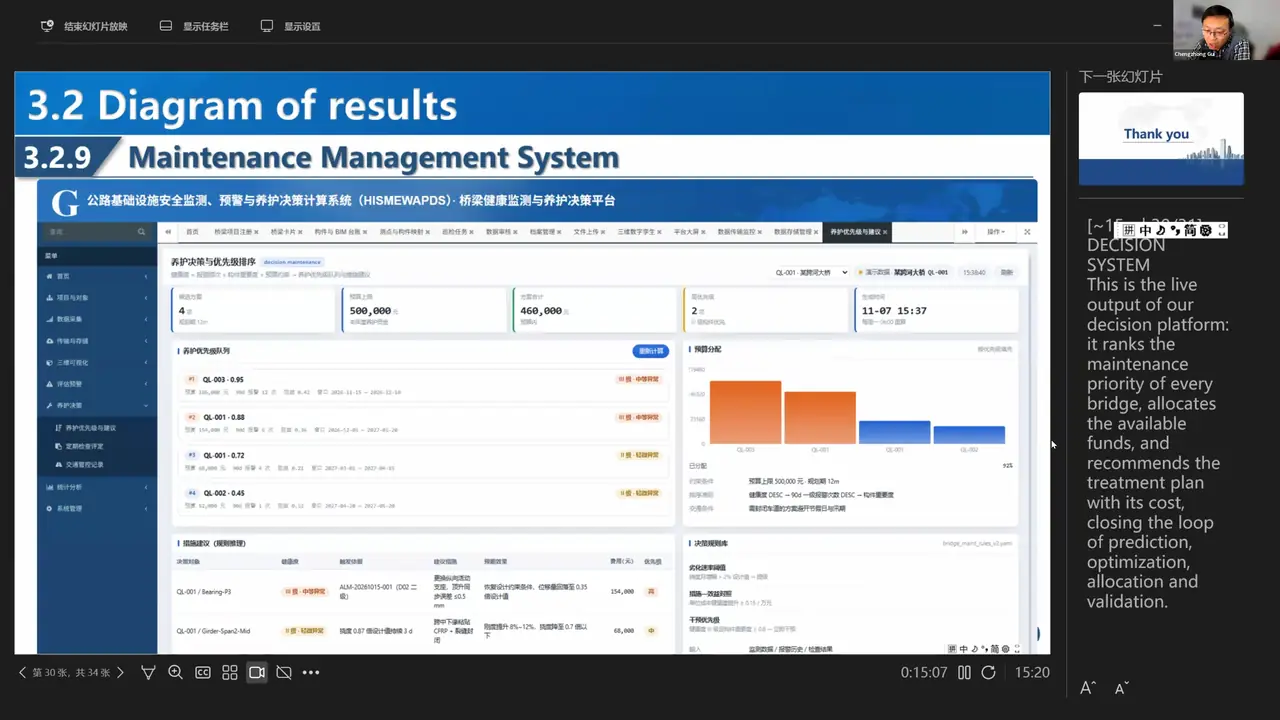
Multi-parameter maintenance decision-making algorithms based on highway bridge inspection
Dr. Gui Chengzhong, University of Emergency Management, Langfang, China
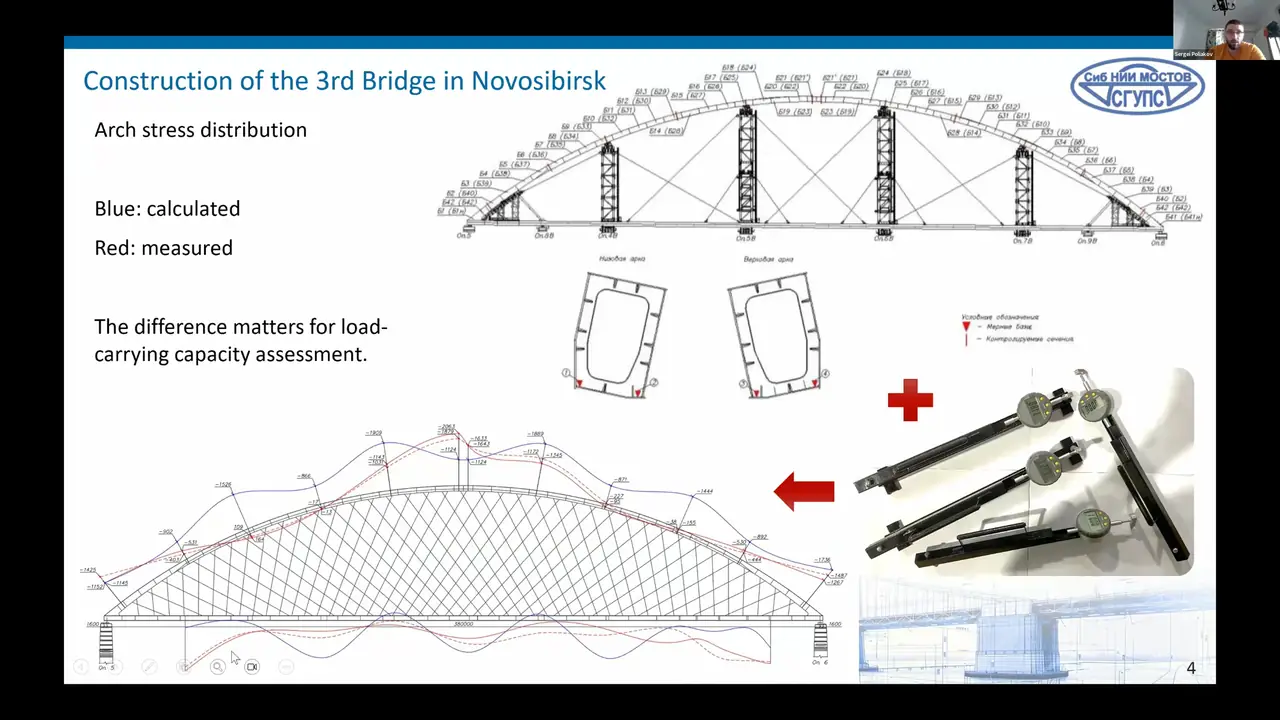
The actual stress–strain state of bridge structures: the difference between practice and theory
Dr. Sergei Poliakov, Siberian Bridge Research Institute, SGUPS, Novosibirsk, Russia
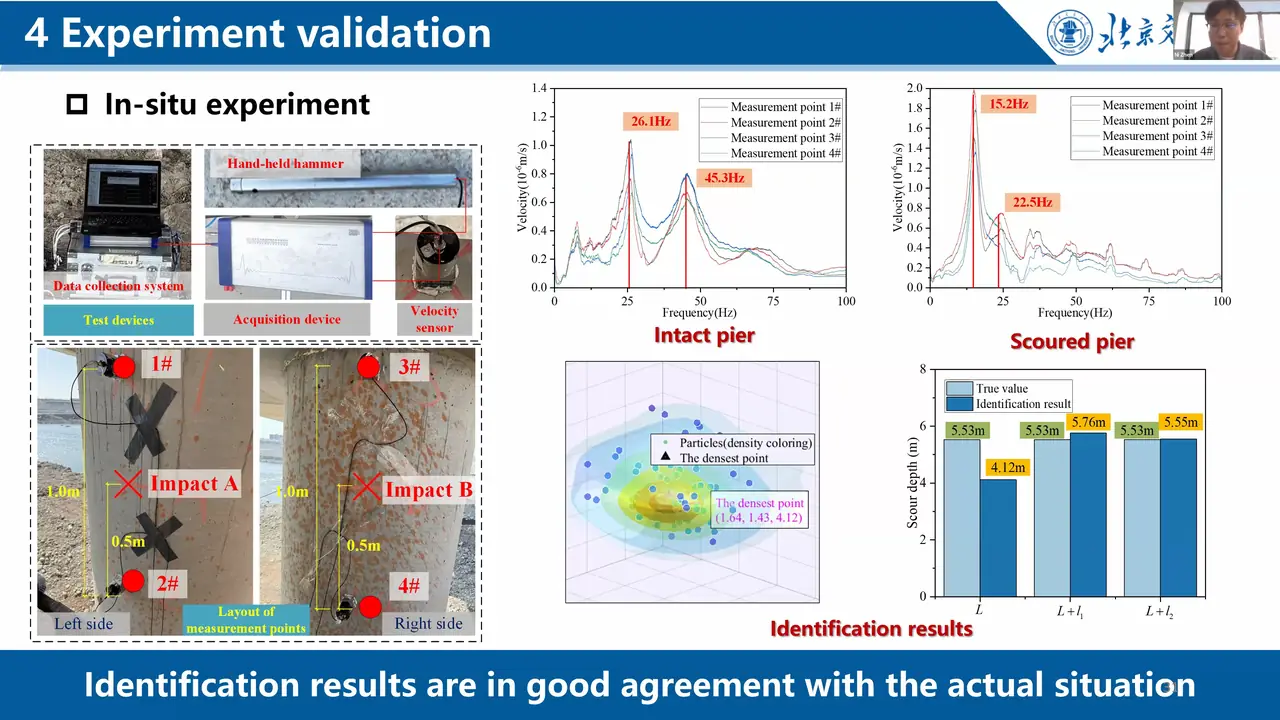
Damage identification method of highway bridge piers based on dynamic testing
Ni Zhen, Beijing Jiaotong University, Beijing, China

Inspection and testing of a highway bridge with a damaged beam
Dmitry Yaroshutin, SPbGASU, Saint Petersburg, Russia
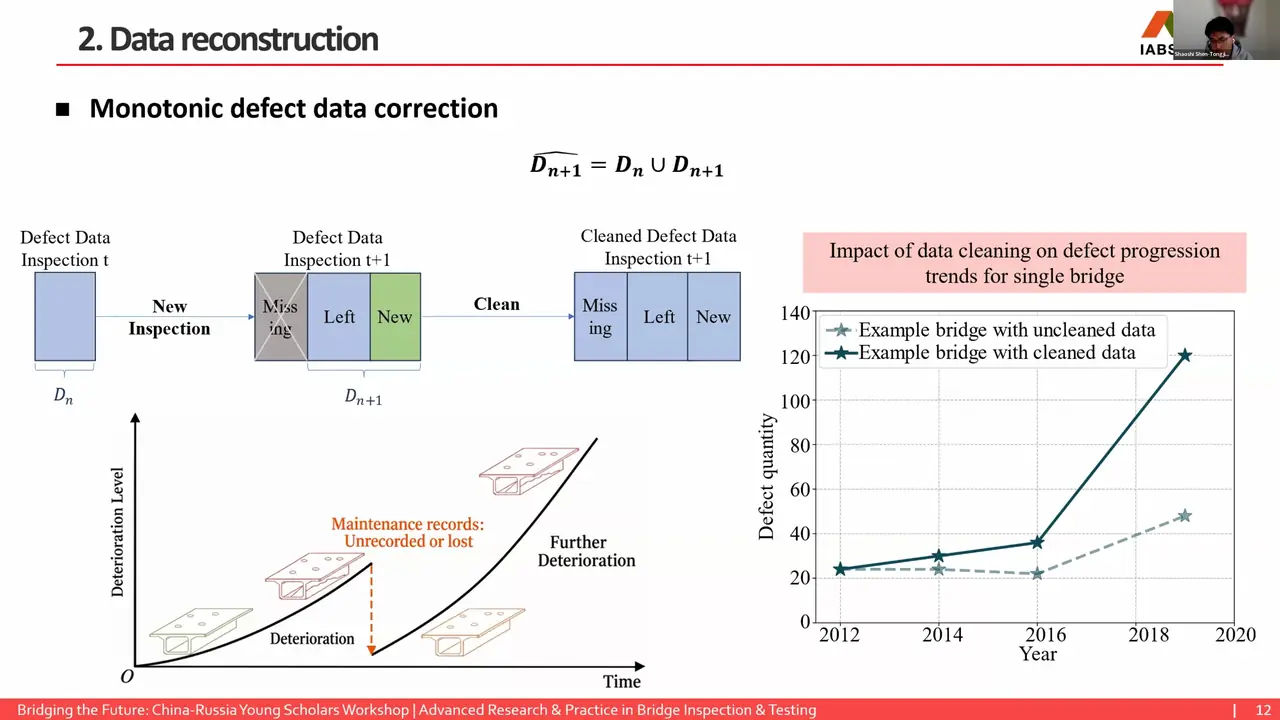
An automated machine learning framework for bridge deterioration prediction using inspection data
Shen Shaoshi, Tongji University, Shanghai, China
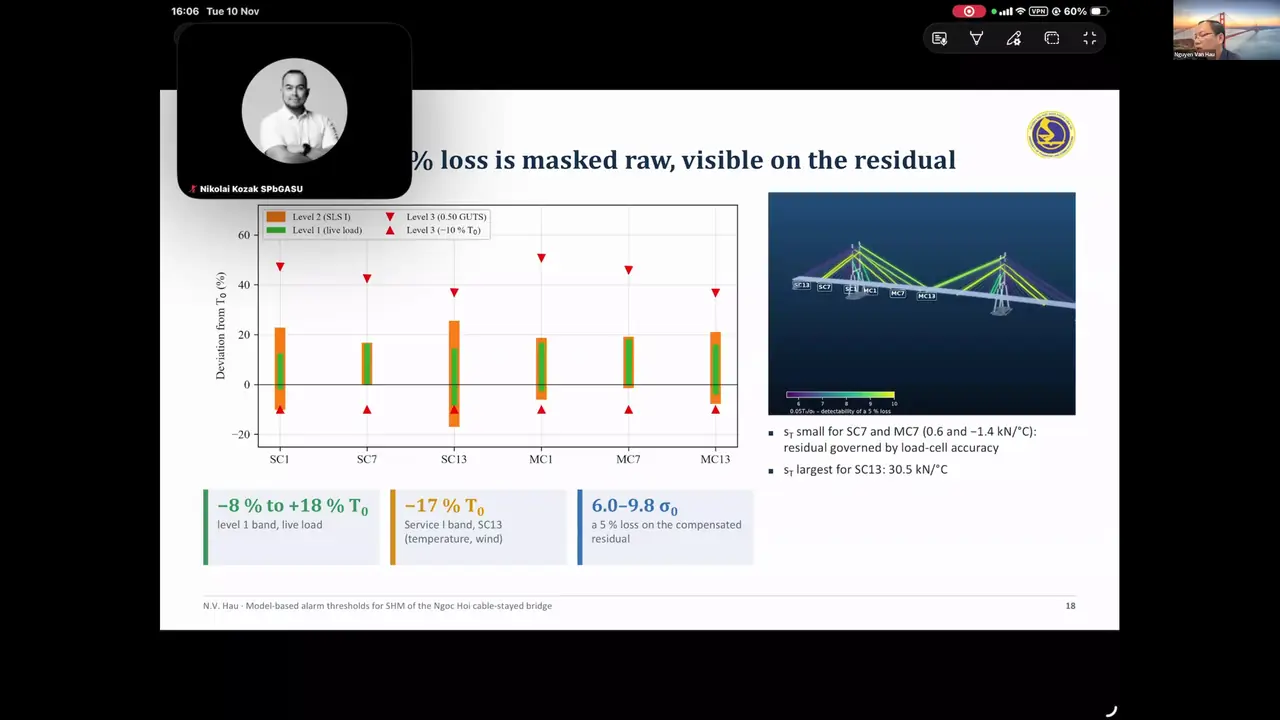
Model-based alarm thresholds with Bayesian calibration and sensor adequacy for structural health monitoring of the Ngoc Hoi cable-stayed bridge
Dr. Nguyen Van Hau, University of Transport and Communications, Hanoi, Vietnam
What the participants said
ShowHide
“At this session, Chinese scholars focused on data-driven maintenance, identification, and prediction, Russian scholars emphasized the integration of theory and engineering practice, and Vietnamese scholars highlighted model-based threshold setting and probabilistic monitoring decisions. The distinct features of each country's research once again demonstrated the value of international exchange.”
“Integrating multi-parameter algorithms into bridge maintenance decision-making fundamentally makes the maintenance process more scientific, shifting from single-index assessments to holistic, data-driven lifecycle management.”
“I am very glad that the second 'Bridging the Future' event brought together so many interested people from universities around the world. For myself, I would like to mention the report of the representatives of Beijing Jiaotong University on the identification of damage to the bridge pier by dynamic parameters.”
“Today's academic exchange was very meaningful. I learned about the research directions of colleagues from various countries and felt that I benefited a great deal. The experts from Russia and Vietnam both attach great importance to engineering practice and have carried out work adapted to local conditions and practical needs. This is actually something that I, as a Chinese PhD student, currently lack. In the future, I should pay more attention to how to apply my research to engineering, rather than merely aiming to publish papers; instead, I should think about how to make technology truly serve practice. I am very grateful to everyone for giving me this valuable opportunity for exchange, and I look forward to sharing with you again next time.”
“The meeting provided a valuable platform for exchanging knowledge, sharing practical experience, and discussing new developments in bridge inspection and testing. It strengthened connections among researchers and practitioners and created opportunities for future international collaboration.”
Photos: Daria Fedorova, Nikolai Kozak
WebDev: Igor Rudakov